
Key takeaways
- The UAE dirham is pegged to the US dollar, so the AED to INR rate moves with the dollar against the rupee.
- The real cost of a transfer is the fee plus the margin hidden in the exchange rate. Compare the final rupees received, not the fee alone.
- Exchange houses, banks and money transfer apps all work well; the best choice depends on amount, speed and how your family receives the money.
- Have your Emirates ID ready and enter the receiver’s name, account number and IFSC exactly as the bank holds them.
The UAE to India route is one of the busiest money corridors in the world. Millions of people send part of their salary home every month, so even a small difference in rate or fees adds up to real money over a year.
This guide explains the main ways to send money from the UAE to India, what you actually pay, and how to choose the right option for each transfer. Check today’s AED to INR rate before you start.
How the AED to INR rate works
The dirham has been pegged to the US dollar at 3.6725 AED per USD since 1997. That means the AED to INR rate is effectively the USD to INR rate divided by 3.6725. When the rupee weakens against the dollar, you receive more rupees for each dirham, and when it strengthens, you receive fewer.
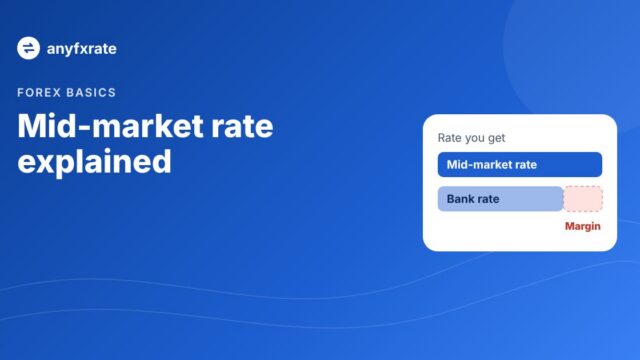
The rate you see in our converter is the mid-market rate. It is the fair midpoint on global markets. Providers usually give you a slightly lower rate and keep the difference as their margin.
Ways to send money from the UAE to India
| Method | How it works | Good for | Watch out for |
|---|---|---|---|
| Exchange house (branch) | Pay cash or by card at a branch; money goes to a bank account or cash pickup | People who prefer in-person help or pay in cash | Rates and fees vary between branches and brands |
| Exchange house app | Same providers, but you send from your phone | Regular monthly transfers | Compare the app rate with the branch rate |
| UAE bank transfer | Send from your UAE bank account through online banking | Larger amounts, account-to-account | Some banks add a wider rate margin or fixed fees |
| Digital money transfer app | Specialist apps that convert and pay out to Indian accounts | Transparent pricing and tracking | Daily or per-transfer limits for new users |
None of these is always the cheapest. Prices change by amount, day and promotion, so compare before each larger transfer. If you want help, our team can compare options for you through regulated partners.
What a transfer really costs
Every transfer has two costs:
- The fee: a fixed charge shown before you pay, sometimes zero on promotional offers.
- The exchange-rate margin: the gap between the mid-market rate and the rate you are given. It is not shown as a fee, but you pay it on every dirham.
Example: you send AED 2,000. If the mid-market rate were 22.90 INR per AED, your family would receive ₹45,800 at that rate. A provider offering 22.55 with no fee pays ₹45,100. Another offering 22.80 with an AED 15 fee pays about ₹45,258. The “no fee” option is the more expensive one.
Use the Send cost tab in our currency converter to see how much a 0.5%, 1.5% or 3% margin would cost on your amount.
Step by step: sending your first transfer
- Check the mid-market rate for AED to INR so you know the fair value.
- Compare two or three providers on the final amount in rupees, including any fee.
- Register and verify with your Emirates ID. Some providers also ask for your passport, visa page or salary details.
- Add the receiver: full name as on the bank account, account number, IFSC code and bank name.
- Choose the purpose, such as family maintenance or savings, and confirm the amount.
- Pay and keep the reference number until the money arrives.
How long does it take?
Many transfers to Indian bank accounts arrive within minutes or the same day, especially through services that use India’s instant payment rails. Bank-to-bank transfers can take one to two working days. Bank holidays in either country, first-time verification and larger amounts can add time.
Where to send the money in India
Non-resident Indians often send money to their own NRE account, which is designed for foreign earnings and can be repatriated. Money for family members usually goes directly to their savings account. If you are unsure which account to use, ask your bank in India, and read our guide to receiving money from abroad.
Is money sent from the UAE to India taxed?
The UAE does not tax personal remittances. In India, money received from a close relative is generally not treated as taxable income, while gifts from non-relatives above ₹50,000 in a year may be taxable. Tax rules change, so check with a tax adviser for large or unusual transfers.
Tips to get more rupees
- Compare the final amount, not the fee or the advertised rate alone.
- Send larger, less frequent transfers if fixed fees take a big share of small amounts.
- Be careful at weekends: when global markets are closed, some providers widen their margin to protect themselves.
- Check the rate trend on the AED to INR chart, but do not wait too long for a perfect rate if your family needs the money.
- Double-check the IFSC and account number. Correcting a wrong transfer can take weeks.
Frequently asked questions
What is the cheapest way to send money from the UAE to India?
It changes by amount and day. Compare the final rupee amount from two or three providers, including fees and the exchange-rate margin.
How much money can I send from the UAE to India?
The UAE has no general cap on personal remittances, but each provider sets its own limits and may ask for proof of income or source of funds for larger amounts.
Do I need an Emirates ID to send money?
Yes. Licensed providers in the UAE must verify your identity, usually with a valid Emirates ID.
Why is the rate lower than on Google or AnyFXRate?
Those sites show the mid-market rate. Providers add a margin to it. Learn more in our guide to the mid-market rate.
Can my family collect cash in India?
Some providers offer cash pickup, but most transfers to India now go straight to a bank account, which is usually faster and safer.
This guide is for general information only and is not financial or tax advice. Rates, fees and rules change; confirm details with your provider before you send.